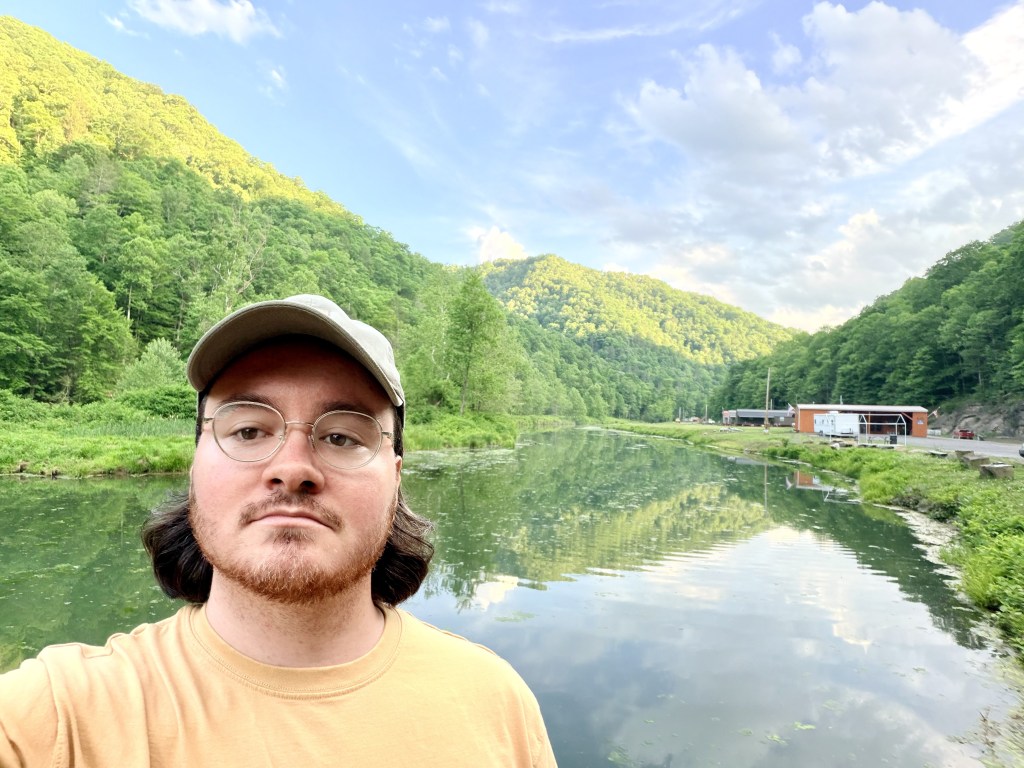
My name is Noah Dennison. I’m an environmental anthropologist and third-year doctoral student at The Ohio State University, where I am advised by Dr. Anna Willow. This year, I’m also the president of OSU’s Graduate Students of Anthropology Association. I’m a first-generation college graduate, I’m proudly working class, and I’m firmly committed to producing scholarship which is as rigorous as it is accessible and impactful for the communities and people with whom I collaborate.
The big question at the heart of my research is: How does environmental change feel?
I’ve spent the last two years exploring and localizing this question in southern West Virginia, where my great-grandfather was born, and where more than 200 years of coal mining has left an indelible mark on the economies, landscapes, and people. I use multimodal ethnographic methods to describe and analyze residents’ relationships to cultural landscapes throughout the remote, rural communities most heavily impacted by changes in the coal industry since the 1970s — when underground mining made way for a new form of coal extraction called mountaintop removal, or MTR. In simple terms, this means I spend time living and talking with people, working alongside them, taking photographs, and recording the sights and sounds of life in the southern coalfields.
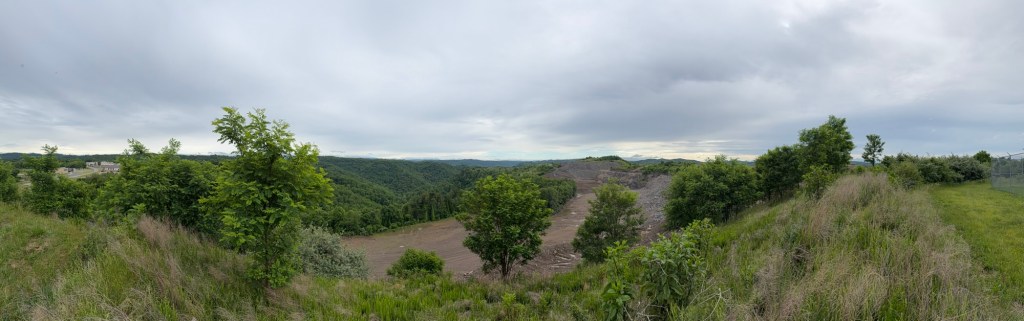
Places like West Virginia’s southern coalfields are often described as sacrifice zones, or “geographical areas subjected to environmental degradation, social marginalization, and economic abandonment after industrial and extractivist activities.” Thus, one of the emergent themes of my current project and dissertation is abandonment. Several questions follow from this concept. What does it mean for a place — whether it’s an industrial site, an individual home, or an entire community — to be abandoned? What does it mean for a population to be abandoned? Who is doing (or causing) this abandonment? Who decides what (and who) is abandoned? How does abandonment feel, and how are these feelings communicated, exchanged, transferred, transmitted, or translated within Mountaineer lifeworlds? In an attempt to answer these questions, I critically analyze discourse at several scales — from individual uses of metaphorical, affective language in everyday speech all the way to the more formal language of legislation and policy. Above all, I hope to highlight the stories of the many people who remain and persist here despite decades of systematic degradation, depopulation, and disinvestment.
Finally, the multimodal aspect of this project is an evolving and ever-growing process, and this website is where I’ll be sharing most of my work. For now, the field photography in my photo gallery represents the bulk of that work, but other modes of translating my ethnographic data into a quasi-experiential product, including audiovisual recordings, will be added over time.
I hope you’ll join me on this journey, and I thank you for being here.

